Reading Between The Tweets

During its infancy Twitter was widely regarded as an obscure digital community for social media geeks and early technology adopters intent on sharing personal musings, self-indulgent daily affirmations and random brain farts. Undoubtedly the informal chatter is still a prevalent force, but Twitter has now entered into the realm of political influence and top breaking news.

The latter was demonstrated by the sudden news of Whitney Houston’s death on February 11th via Tweets surfacing almost a full 1/2 hour before the mainstream press began picking up the story. While not exactly a new phenomenon this (yet again) illustrates the incredible speed with which events unfold on Twitter, aided in part by the proliferation of smartphones connected to the Net and the growing number of Twitter users with hyper-active thumbs.
On another level, the question that is perhaps vexing editorial directors throughout the media world: has Twitter, and to a larger extent social media, finally supplanted television, radio, and print media as the dominant conduit for breaking news and information?

Twitter has become so fast and effective a means for breaking stories, the BBC and Sky News have reportedly implemented a policy mandating their journalists release news details internally first. That is, file copy among colleagues before venturing onto Twitter.
Established news outlets are clearly looking to cement their place among the micro-blogging communities. Twitter has caused some journalists to adopt a Tweet first, ask questions and write a thoughtful well researched piece later. Though others, like John Plunkett of the Guardian UK, are beginning to question this trend:

Is it right, for instance, to break news on Twitter before it reaches any broadcast outlets?

We are all feeling our way forward through the fog of this new media landscape. The social media revolution is changing power structures in newsrooms, allowing young journalists who understand this new world – and a few older ones – to build reputations independent of their own organisations.

Some would like to turn the clock back to a simpler time, when all power resided in the newsdesk, only star reporters got a byline, and sharing information with outsiders before the presses rolled or the bulletin began was a sacking offence.

But it is almost certainly too late for that.

A popular argument among social media proponents is that Twitter and modern blogging platforms highlight some glaring inefficiencies of the pre-digital age of news gathering. Namely that it was a slow and cumbersome system that relied on a few isolated channels of communication. Now these old analog channels of distribution must adapt to a culture of immediacy where the über-connected sect crave—and now expect—headline news as it happens, not at 6, 9 or 11pm in compartmentalized chunks.

A dramatization of this scenario plays out as an interesting subplot in the film Contagion. Jude Law’s character Alan Krumwiede, a journalist and renegade blogger, encounters opposition in the form of editorial barriers by his superiors as he attempts to break news of a deadly virus outbreak. In citing YouTube material, his television editor casts a shadow of doubt on the authenticity of the footage, thus forcing Krumwiede’s hand into leaking the story on his blog (and presumably onto his public Twitter account).
Here the implied dubiousness of the YouTube footage in the film is symbolic of digital media’s lack of maturity and acceptance as a credible source of information. In the same way, vaguely reminiscent of a university professor’s weariness of accepting Wikipedia citations as part of an essay submission.
In another scene Krumwiede approaches Dr. Ian Sussman, a virus vaccine researcher played by Elliot Gould, who learns of Krumwiede’s theories but quickly dismisses him (and his rogue ideas): “…you’re not a writer. Blogging is not writing. It’s just graffiti with punctuation”.

Aside from Twitter’s inherent spontaneity, some of which may be interpreted as graffiti, is this idea social media is unfettered by the existing layers of hierarchy and publishing protocols rigorously followed by conventional news agencies. Whether this is advantageous long term to fostering cohesively-minded news organizations producing high quality material or bands of free-wheeling renegade journalists spewing half-baked noise is debatable.
In any case, the raw unfiltered nature of Twitter and other social communities can be both alluring and a daunting proposition for mainstream news outlets. Senior editors must invariably balance timeliness of reports with quality and accuracy of the information being presented.

Whether it’s the reputation of an individual or the identity of an entire news organization at stake, Twitter has, at least for the time being, become part of the news media mainstream.

Twitter is fast—really fast—as demonstrated in the case of Whitney Houston’s death, but also a magnet for misinformation and graffiti (with punctuation). Case in point: RIP Chris Brown Death Hoax Trends on Twitter After Whitney Houston’s Death.

It’s naive to assume everything we read on Twitter is factual. The Chris Brown RIP hoax, also: Tiger Woods, Madonna, Cher, Jackie Chan, and Soulja Boy hoaxes only continue to illustrate Twitter’s fallibility as a credible source for news and information.

Posted in culture, media & technology, social | Tagged , , | Leave a comment

Machines Of Loving Grace

Networked Equilibrium

Without a doubt the most provocative words I’ve come across this week were written—not last week, or even last year—but 18 years ago, by the late Carmen Hermosillo.

Incidentally the notable 2nd-place spot for astonishing words read (among the non-fiction variety) go out to Walter Isaacson and his enthralling biography of the late Steve Jobs: chapter 1, page 5, in which Steve Jobs affectionately refers to his biological parents as “my sperm and egg bank”.

Background
Carmen Hermosillo was a cyberspace theorist, blogger, and early adopter of digital technologies during the pioneering days of the Web back in the early 1990′s. She taught trans-disciplinary humanities and worked as an industrial Web Analyst, Content Manager, and also co-wrote and collaborated on numerous papers appearing in Wired and Leonardo.

Hermosillo was originally a big proponent of the Web. However, in 1994 she wrote an essay that caused an uproar, entitled Pandora’s Vox: On Community in Cyberspace. In it she audaciously broke from the prevailing cyber-utopianism of the day by painting a critical view of computer and information networks. Hermosillo suggested these emerging digital systems, coupled with the rapid commercialization of the Web, were ushering in an era of uneven power distribution and centralized control. The consequences for human interaction and personal expression were, as Hermosillo put it, dire.

Here are several rather salient excerpts:

It is fashionable to suggest that cyberspace is some kind of _island of the blessed_ where people are free to indulge and express their Individuality.

This is not true.

I have seen many people spill out their emotions, their guts on-line, and I did so myself until, at last, I began to see that I had commodified myself. Commodification means that you turn something into a product which has a money-value.

In the nineteenth century, commodities were made in factories by workers who were mostly exploited. I created my interior thoughts as a means of production for the corporation that owned the board I was posting to [e.g. Compuserve, AOL], and that commodity was being sold to other commodity/consumer entities as entertainment. That means that I sold my soul like a tennis shoe and I derived no profit from the sale of my soul. People who post frequently on boards appear to know that they are factory equipment and tennis shoes, and sometimes trade sends [text messages] and email about how their contributions are not appreciated by management.

Cyberspace is a black hole; it absorbs energy and personality and then re-presents it as spectacle.

Many cyber-communities are businesses that rely upon the commodification of human interaction.

These thoughts are intriguing, but also agonizingly negative.

Why did Hermosillo, initially a proponent of the Web, become so disenchanted with cyberspace?
These and other compelling questions are raised in Adam Curtis‘ BBC documentary series All Watched Over by Machines of Loving Grace. Whether we’re getting lost in the spectacle of cybernetic commodification or creating a new system of networked equilibrium and human empowerment is, nevertheless, open for debate.

Posted in technology, thoughts & ideas | Tagged | Leave a comment

The Big Blue Hype

zuckerberg-superbowlType-in the keywords “Facebook IPO” and you’ll get a startling result: about 40,900,000 results on Google.com and about 1,190,000,000 results on Google.ca.

Am I reading that number right? 1-billion 190-million results returned by Google.ca.

I don’t get it. What’s going on here? Do Canadians care more about the Facebook IPO than Americans? Interestingly, switching over to Google.co.uk yields about 1,100,000,000 results —90 million results less than Canada. Google’s search algorithms must have a reason. Maybe IP address and query location have something to do with the result.

Regardless of where you live, two of the biggest stories circulating the Web this past week haven’t been the latest US/Canadian employment numbers or the fact that it’s snowing in Rome. Really? No. The biggest stories, at least here on North American soil, seem to be everything (and anything) related to the hype surrounding Super Bowl XLVI and the forthcoming Facebook IPO. Both are huge, highly anticipated events generating an endless (read: endless) amount of speculation and analysis—a.k.a. Internet buzz.
Mashable.com, long known for their in-depth coverage of Facebook, may as well create a permanent Facebook IPO button on their main site navigation to house the reams of articles written on this topic. Oh wait, they already did—it’s on the right-hand side in the ‘Featured’ nav bar.

The other big event, the Super Bowl, has easily become the most watched sporting event in America in recent years with well over 111 million viewers in 2011 (Super Bowl XLV). This year potentially hundreds of millions more will tune-in as the NFL has announced a full streaming broadcast of the game will be available on the Web for the first time.
If you’re really only interested in seeing the high budget American Ads, they’ll be going up in sequence on a dedicated YouTube channel throughout the game. Oh joy. Take that CRTC!

While this is happening you might want to check in on the latest Facebook IPO news. But wading through the staggering number of stories published around the clock would be a futile exercise in information overload.

One of the emerging stories worth a read though, the Facebook IPO will create at least a thousand new millionaires. That’s close to 1/3 Facebook’s employees entering the exclusive 1-percent segment of the population. As the monetization of the world’s largest social network accelerates, in a rapid twist of fate, Occupy Movement organizers may eventually seek an alternative platform for mobilizing people and staging protests. In becoming one of the world’s largest publicly traded companies, profits and shareholder interests may soon begin to overshadow Facebook’s ethos: “…to give people the power to share and make the world more open and connected.” A company employing 1000+ millionaires—Mark Zuckerberg himself a billionaire several times over—could potentially dog Facebook in the future and come to symbolize the growing inequality between rich and poor.
Let’s hope Zuckerberg and company become bigger philanthropists than Steve Jobs was during his tenure at Apple, once the money starts rolling in of course.
Facebook founders and majority stakeholders take note: Bill and Melinda Gates have effectively set the bar in this regard.

Posted in culture, media & technology | Leave a comment

Hello Computer

hello computer

The science fiction genre is a wonderous storytelling vehicle. It gives us a glimpse into our future, the technologies we might be using, and how we’ll possibly interact with one another amidst the vast information networks influencing our world.

Since its release almost a decade ago, Minority Report remains one of the most referenced sci-fi movies for futuristic user interface design in recent memory. If there were ever an interactive design textbook or manual containing required viewing and inspirational cinematic pieces, Minority Report would almost certainly be among the top 20.
Admittedly, I’ve used various screen captures from scenes involving the PreCrime Unit and the funky gesture-based interface Tom Cruise and company used to catch criminals on a few creative mood boards over the years, as have a lot of other art directors I imagine.

There’s no denying gesture based UIs will someday replace mouse and keyboard inputs. Technologies like Pranav Mistry’s SixthSense UI and more recently Apple’s Siri, suggest we’re heading towards a dematerialized future of seemingly invisible devices in which conventional screen based interfaces will eventually be replaced by more natural forms of input. Speaking and physical body movements come to mind. In fact someday simply clicking a mouse or tapping a touch sensitive screen may feel like a painfully archaic way to interact with information. Let’s hope repetitive strain inducing forms of HCI one day become a thing of the past.

I recall seeing John Underkoffler demo his g-speak (short for gesture speak) UI research at FITC back in 2010. It was amazing. I thought to myself, the UI concepts depicted in Minority Report were no longer science fiction, but were arguably becoming science fact.
Underkoffler said he believed (at the time) we were 5 to 7 years away from interfaces similar to Minority Report. Though I now tend to think a more ambitious mind/UI leap will materialize in the form of cybernetic implants akin to The Matrix or Brainstorm (no, not that thing you do at meetings—the 1983 sci-fi movie starring Christopher Walken).

But it’s fair to argue cybernetic interfaces may be much further off —after all, who really wants a network ethernet cable plugged directly into the back of their neck? Who would want their thoughts recorded and played back for others to experience?
Perhaps learning jujitsu in a matter of seconds would have benefits. Why bother going to martial arts classes for years when you could perform a near instantaneous knowledge transfer downloaded directly to your cerebral cortex.

One day, something similar to this mildly disturbing scenario may play out and finally render books, television, digital texts, and all conventional forms of media consumption permanently obsolete.

Oh, but how would advertising function in such a hyper-knowledge based society? Would we pay subscription fees to agencies like Rekall providing weekly memory implants and virtual vacation experiences to Mars like the ones Douglas Quaid took?

The Nexus-6 Replicants engineered by the Tyrell Corporation in Blade Runner, though not human, were given memory implants to artificially provide an emotional cushion.
The years of experiences we generally take for granted provide a sort of mental stability in our lives, but would otherwise create a distressing existence if obstructed or removed —human or otherwise.

Maybe those of us employed as the UX designers and application developers of today will be the ones crafting the memory plug-ins of tomorrow.
True escapism and one of a kind out-of-body immersionsTM, all for the incredibly low price of $195 per petabyte of data assimilation. Sounds like a bargain, until you have a psychotic break from reality.

Still, these types of synthetic experiences characterized by direct mind/device neural interfaces sound down right nightmarish compared to current augmented reality concepts. In fact, the dystopian themes running rampant through sci-fi are made all the more explicit by such ideas and the popular notion we’ll eventually form an insidious bond with the technologies we use.

So, had enough doom and gloom yet?

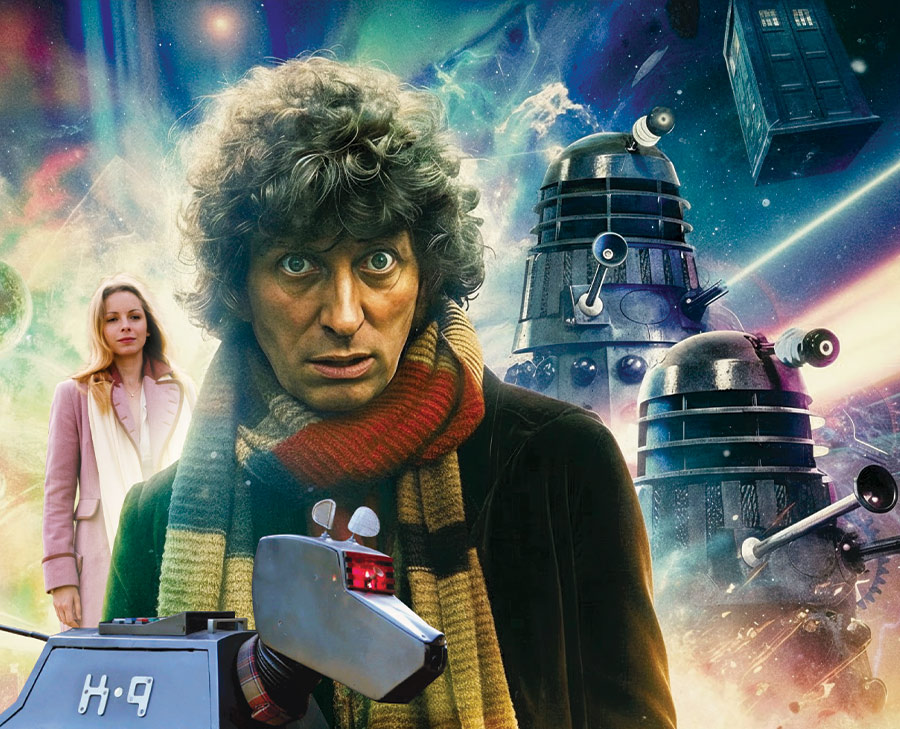
In reality the next user interface you’re bound to experience (if not already) may be something a little less invasive. It’s possible Steve Jobs’ swan song, Siri, was inspired by a funny scene in Star Trek IV: The Voyage Home (yes, that strange image gracing the top of this post).
Captain Kirk and the Enterprise team travel back in time to save the world from, you guessed it, some advanced alien intelligence threatening to destroy the human race. Commander Scott finds himself in front of a primitive computer of the day (a Macintosh by the looks of it, circa 1986).
Low and behold Mr. Scott is surprised to learn he must use a keyboard instead of (gasp!) voice recognition. “How quaint, a keyboard” he says, as he begins to effortlessly type out the molecular formulas for 1-inch thick transparent aluminum.

Was Steve Jobs a Star Trek fan? Maybe Jobs, after watching this scene, had an epiphany for Siri and voice-op UIs back in 1986? Or maybe it was the scene involving the SAL computer in the 1984 film 2010 – The Year We Make Contact.
In any case, talking to our computers will soon become a normal activity while clicking a mouse, even touching a screen, perhaps going the way of the hand-written letter.

Posted in culture, media & technology, user experience | Tagged , , , | 1 Comment

The Transient Nature Of Digital Text

letters in stoneNicholas Carr believes digital publishing tools are ushering in an era of perpetual revisions and updating. Literary works and essays once synonymous with a ‘set in stone’ sense of permanence are now, as Carr puts it, losing their ‘fixity’ in the digital space.

The e-book industry’s embrace of cloud-based technologies, for example Amazon’s Kindle Direct Publishing service, means book authors, once accustomed to a publish-and-leave-it process (or at least until subsequent book editions are released) can now upload edits to their manuscripts indefinitely—and immediately—when the desire hits:

Once digitized, a page of words loses its fixity. It can change every time it’s refreshed on a screen. A book page turns into something like a Web page, able to be revised endlessly after its initial uploading. There’s no technological constraint on perpetual editing, and the cost of altering digital text is basically zero. As electronic books push paper ones aside, movable type seems fated to be replaced by movable text.

Bloggers, in particular, intuitively know the power (and perhaps drawbacks) of being able to constantly rewrite, edit and tweak written posts on a whim. The book publishing industry though, still seems to be coming to terms with the inherently transient nature of the digital format. While individual authors may feel a sense of empowerment with fewer obstacles in place to getting their works in front of readers, publishers will perhaps regard the waning market for paper books as a disruptive and unavoidable phase in the evolution of the book publishing industry.

(Photo credit: myfear)

Posted in culture, media & technology, technology | Leave a comment